Repair or Replace
Repair your appliance if it is less than half way through its expected life and the repair costs less than half the price of a new one. Replace it if both numbers are past half. That is the 50/50 rule, and it settles most repair or replace decisions in a minute.
The 50/50 rule compares two numbers. The first is how far your appliance is into its expected life. The second is the repair cost as a share of a comparable new appliance.
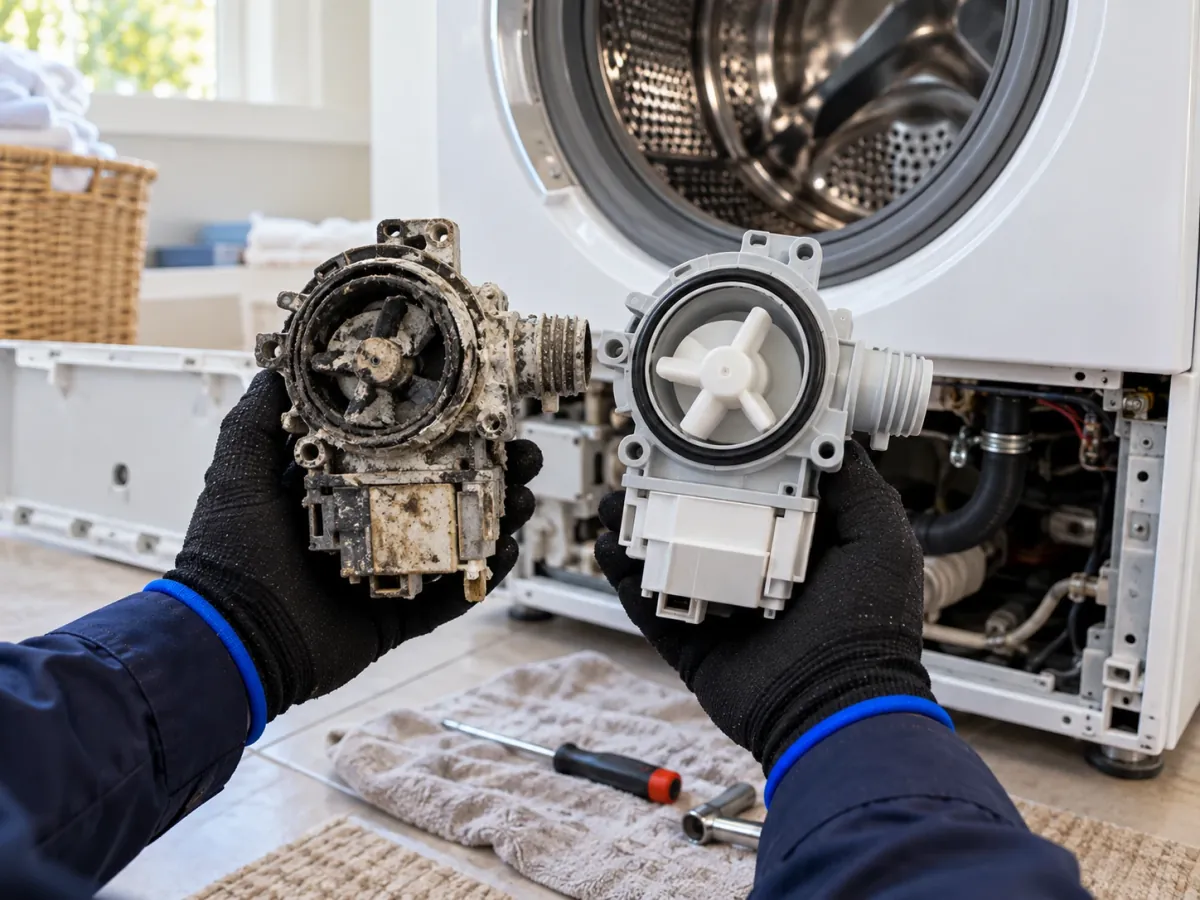
Take a 4 year old washer with a failed drain pump. It is 40% through a 10 year life, so the repair almost always makes sense.
Lifespans from the National Association of Home Builders. This checker is a guide, not a diagnosis.
Average lifespans give you the first half of the 50/50 rule. These figures come from a National Association of Home Builders study.
| Appliance | Average life | Half way point |
|---|---|---|
| Refrigerator | 13 years | 6 to 7 years |
| Freezer | 11 years | 5 to 6 years |
| Washer | 10 years | 5 years |
| Dryer | 13 years | 6 to 7 years |
| Dishwasher | 9 years | 4 to 5 years |
| Gas range | 15 years | 7 to 8 years |
| Electric range | 13 years | 6 to 7 years |
| Garbage disposal | 12 years | 6 years |
Dallas conditions can shorten these numbers. Hard water scales up dishwashers and washers, and summer heat pushes garage fridges and freezers hard. See our guide to Dallas hard water and your appliances.
Most breakdowns come down to one worn part. These repairs are usually worth doing at almost any age:
Our washer repair, refrigerator repair and oven repair pages cover these fixes in detail.
Some failures cost close to a new appliance, especially on an older machine:
Not sure which side you're on? Call Sam at 214-406-5754 or Reese at 269-227-0382. We'll tell you plainly if a repair isn't worth it.
Often, yes. A refrigerator lasts about 13 years on average, so a 10 year old fridge still has a few years left. The deciding factor is which part failed.
Fans, defrost parts, gaskets and control boards are routine repairs, even at 10 years. A failed compressor or a refrigerant leak at that age usually costs close to a new fridge. In that case, replacing makes more sense.
An old refrigerator uses about 20% more energy than a new model, according to ENERGY STAR. That gap adds to the case for replacing a fridge near the end of its life. It matters far less on a 5 year old model.
Often, yes. The average refrigerator lasts about 13 years, according to the National Association of Home Builders. If the compressor and sealed system are sound, a fan, defrost part or control board repair usually makes sense. A failed compressor at 10 years usually does not.
The 50/50 rule says to replace an appliance when it is past half its expected life and the repair costs more than half the price of a comparable new one. If only one of those is true, repair usually wins. It is a starting point, not a hard law.
Two or three service calls on the same appliance within about two years is a warning sign. It points to wider wear, not one bad part. At that point, put the money toward a replacement unless the latest fix is minor and the appliance is still young.
Get Started
Call or WhatsApp us between 8 AM and 8 PM, any day of the week. For a flooding washer, a dead freezer or an AC that quit in July, call any time.
 MAYFAIR